

Quick Summary
- A private phone number means a hidden identity
A private number indicates that the caller has intentionally masked their phone number, so you cannot see who is calling you. - Used for privacy and professional reasons
Many individuals and businesses use private numbers to protect personal information, maintain confidentiality, or avoid unwanted callbacks. - Not always spam or dangerous
While some private calls may be suspicious, many are legitimate, including calls from hospitals, companies, or service providers. - Appears in different forms on phones
You may see labels like Private Phone Number, No Caller ID, or Unknown Caller, depending on how the number is blocked or transmitted. - Requires awareness, not fear
Instead of assuming every private call is risky, it’s better to evaluate the situation and respond carefully based on context.
If private or unknown calls are not reaching your phone, use our Android and iPhone private call unblocking guide to update your call filtering settings.
What Is a Private Number?
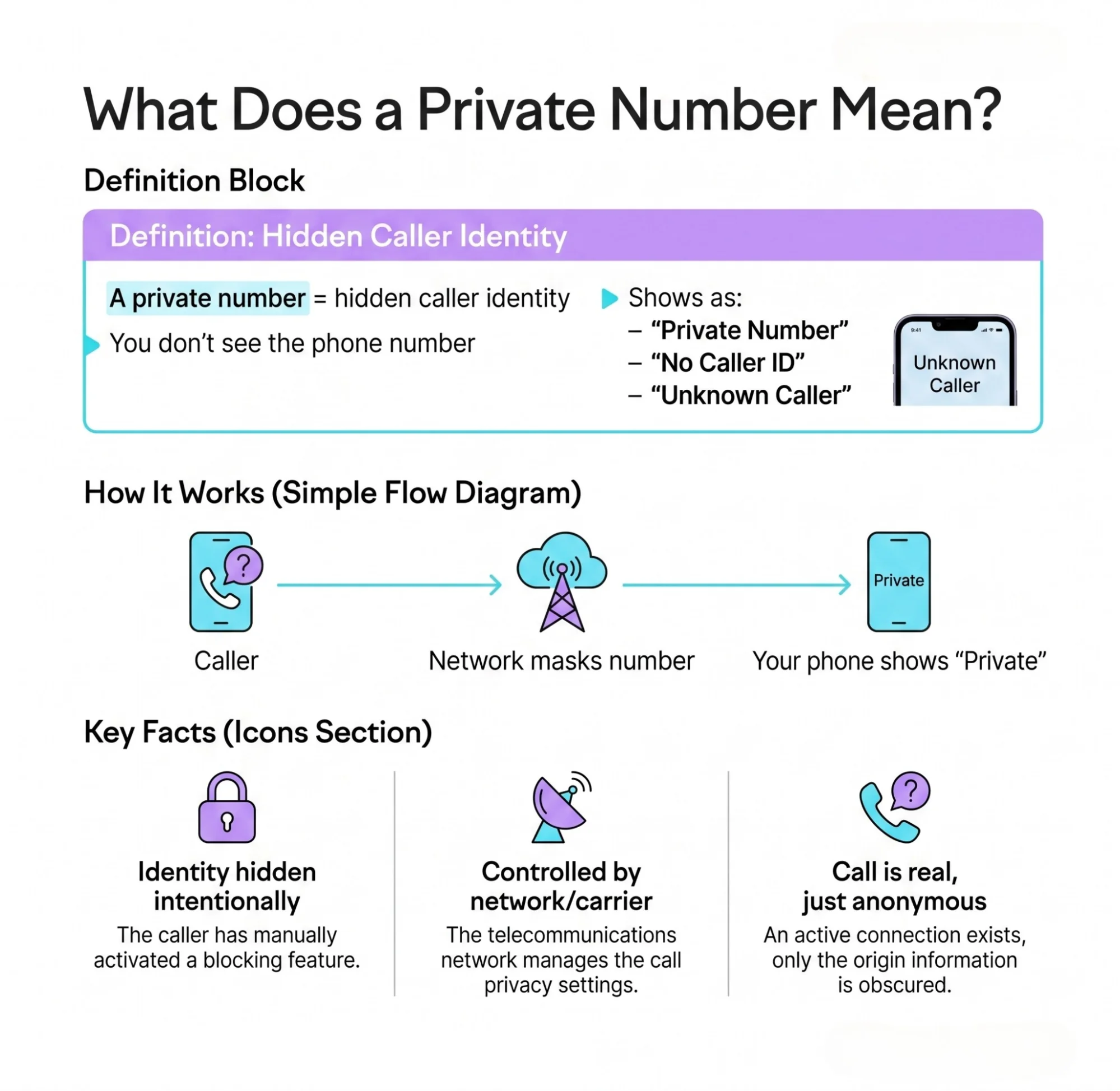
A private number means the caller has deliberately hidden their phone number, so it does not appear on your screen when they call. Instead of showing digits, your phone displays labels like Private Number, No Caller ID, or Unknown Caller.
What it really means
- The caller chose not to share their number
- The network blocks caller ID information
- The call is still real, just anonymous on your screen
Why it appears
- Caller manually hides their number before dialing by using a setting or service that blocks their caller ID.
- Their service provider automatically blocks the caller ID.
- The call originates from systems that don’t transmit caller identity.
How a Private Phone Number Works
Caller ID Masking Explained
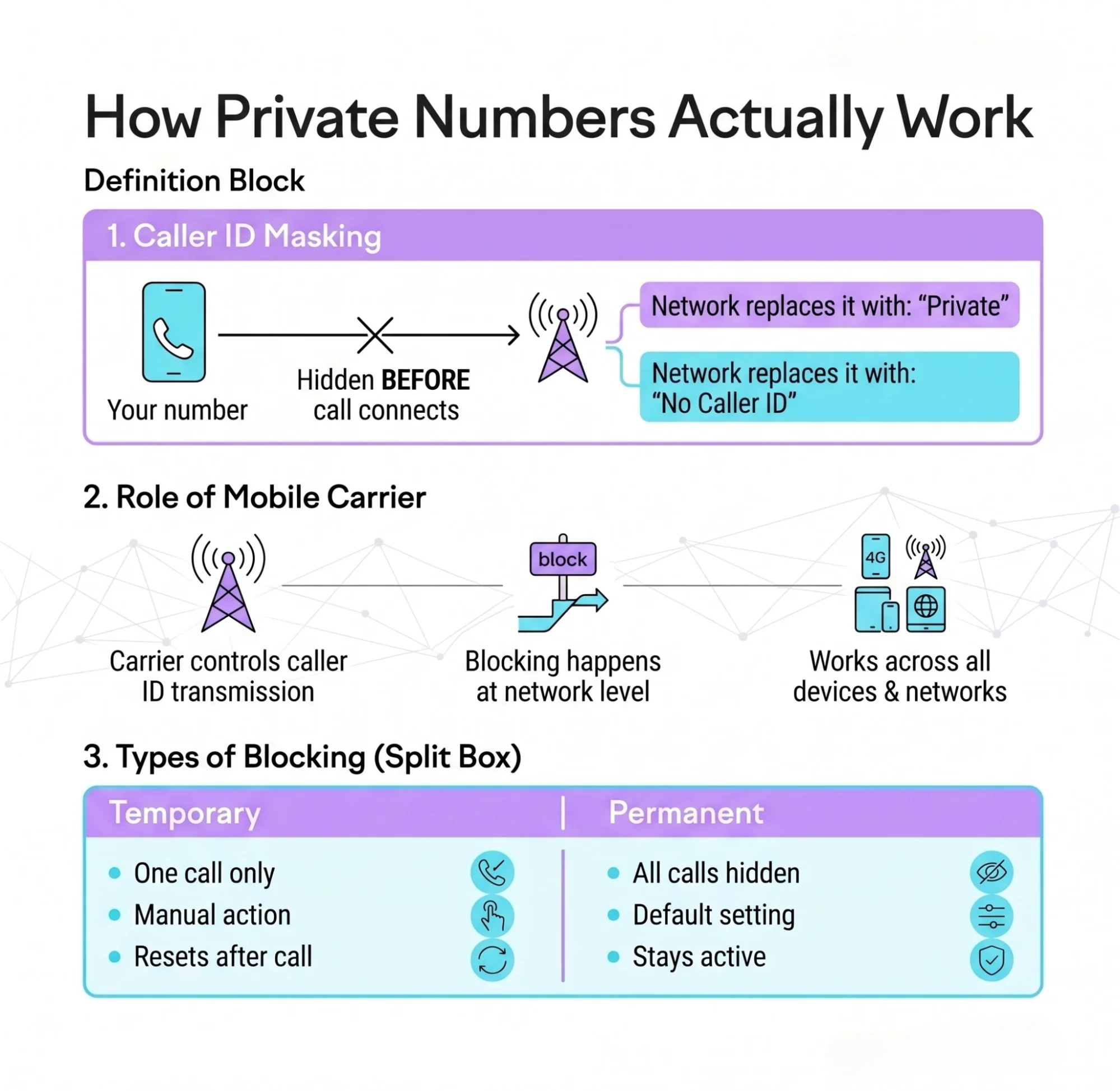
- Your phone number is normally sent along with every outgoing call.
- When a private number is used, the number is hidden before the call is transmitted.
- The network replaces your number with labels like “Private,” “No Caller ID,” or “Unknown.”
- This process is called caller ID masking, ensuring the receiver cannot see your identity.
Role of Your Mobile Carrier
- The mobile carrier controls caller ID transmission, not just your phone.
- When private calling is enabled, the carrier blocks or removes your number at the network level.
- This ensures the masking works across all devices and networks.
- Even if the recipient uses a different carrier, your identity remains hidden.
Temporary vs Permanent Blocking
Temporary Blocking:- Applies to a single call only
- Your number returns to normal after the call
- Enabled through phone or carrier settings
- All outgoing calls show as private by default
Both methods hide your number, but differ in duration and control.
Why Does Someone Use a Private Number?
Not every private call is suspicious. There are several legitimate reasons why someone might hide their number.
- Privacy reasons
People don’t want their number saved or shared.
Personal boundaries (e.g., calling strangers or clients). - Business and professional use
Doctors, consultants, or recruiters may call privately.
Companies sometimes use masked numbers for outbound calls.
Customer support teams may hide numbers to avoid callbacks. - Security purposes
Law enforcement or investigators may conceal their identity.
Journalists or whistleblowers may need anonymity.
Individuals avoid harassment or tracking.
In many cases, hiding a number is simply about control over personal information, not deception.
Is a Private Phone Number Safe or Dangerous?
A private number can be either safe or risky. It depends on the context.
When it’s safe
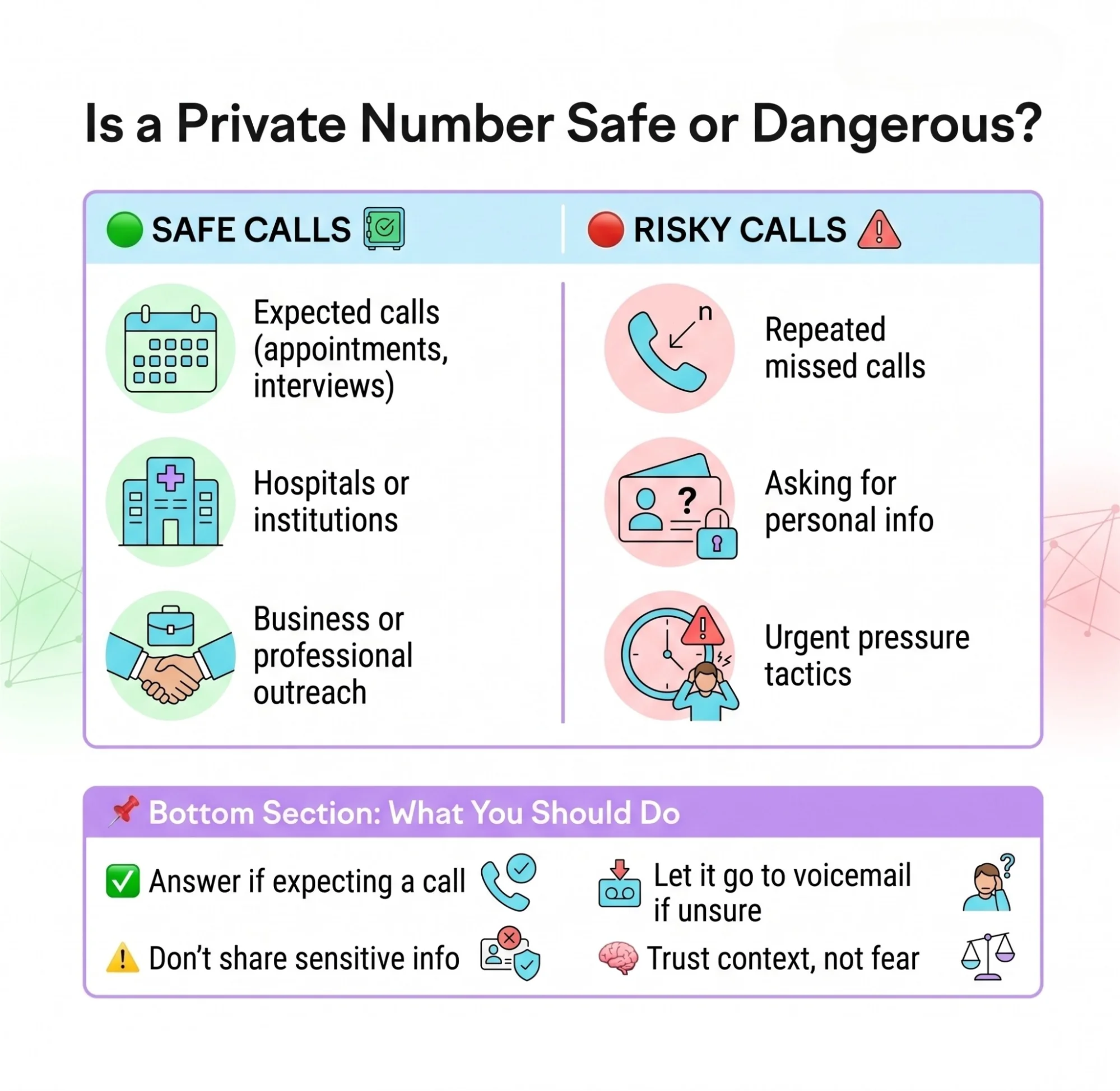
- Expected calls (job interviews, deliveries, appointments)
- Calls from institutions like hospitals or offices
- Someone protecting legitimate privacy
When to be cautious
- Repeated missed calls with no voicemail
- Calls that pressure you for personal or financial details
- Unknown callers asking sensitive questions
A private number itself isn't dangerous, but how the caller behaves determines the risk.
Common Situations You'll See Private Numbers
You're more likely to encounter private numbers in specific scenarios.
- Calls from institutions
Hospitals and clinics
Government offices
Corporate call centers
These organizations often mask numbers to manage large volumes of calls. - Unknown inbound calls
Sales or outreach calls
Survey or research calls
Individuals contacting you for the first time - Personal or one-time communication
Someone who doesn't want follow-ups
Temporary or one-off interactions
Private Number vs No Caller ID vs Unknown Caller
These terms are often used interchangeably, but there are slight differences:
- Private Number: Caller intentionally hides their number.
- No Caller ID: Similar to private; identity is withheld.
- Unknown Caller: Network couldn't detect or transmit the number.
While the labels differ, the result is the same: you don't see who is calling.
If you want a deeper breakdown between these labels, read this guide: no caller ID vs unknown caller.
What You Should Do When You See One?
When you receive a private number call, the best approach is to stay aware but not alarmed.
- Assess whether you're expecting an important call.
- Avoid sharing sensitive information immediately.
- Let it go to voicemail if you're unsure.
- Trust your judgment based on timing and context.
The key is caution, not panic.
If these calls are frequent, apply device-level blocking with this step-by-step tutorial: how to block private numbers from calling you.
Conclusion
A private number simply means the caller has chosen to hide their identity. It’s a common feature used for privacy, business communication, and security reasons.
While some private calls can be unwanted or suspicious, many are completely legitimate. The smartest approach is to evaluate the situation rather than assume the worst.
Understanding what a private number means helps you respond confidently—whether you decide to answer, ignore, or follow up later.
If your own number appears as private by mistake, use this fix guide: how to remove a private number on your phone.