

30 Second Summary
For related reading, see our AI phone answering services guide article.
- AI Phone Answering Service automatically answers business calls using conversational AI, ensuring no customer call goes unanswered.
- A modern AI answering service uses speech recognition and natural language processing to understand callers and respond in real time.
- Businesses use an AI call answering service to capture leads, book appointments, and provide 24/7 customer support.
- The best AI phone answering service for small business can reduce missed calls, improve response time, and lower support costs.
- Compared to traditional receptionists, an AI phone answering service offers scalable communication, multilingual support, and automated call handling.
For related reading, see our best AI answering services article.
If hidden numbers are being filtered before your team can answer them, use our private call unblocking guide for Android and iPhone.
1. Introduction: The “Death of Voicemail” Era
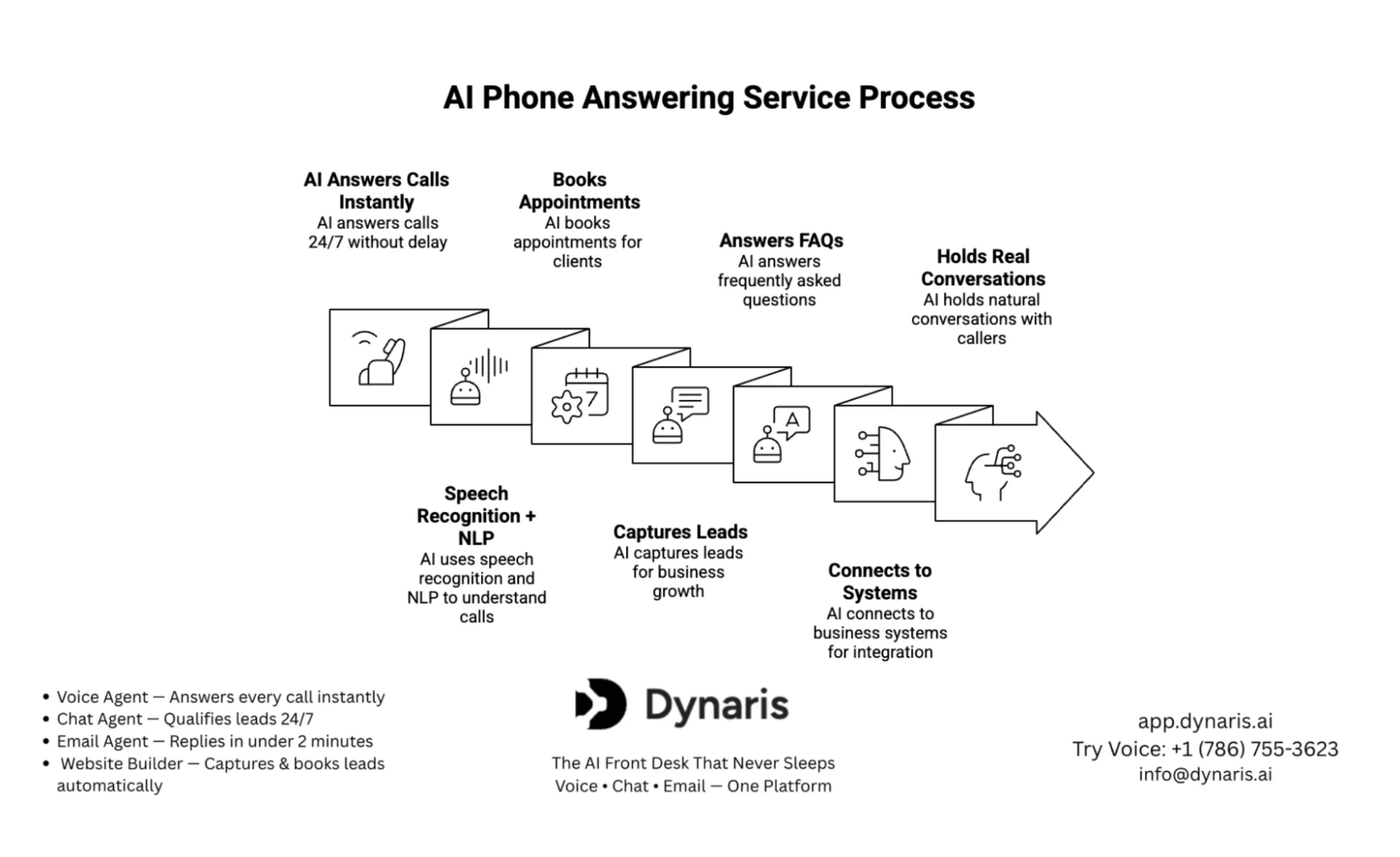
Most businesses still rely on voicemail to capture missed calls. The problem is simple: customers rarely leave messages. Multiple industry studies estimate that up to 80% of callers hang up when they reach voicemail, and instead contact the next business in search results.
For related reading, see our best AI answering services article.
For related reading, see our AI phone answering services guide article.
For small businesses, this creates a massive revenue leak. Research shows many small companies miss up to 62% of inbound calls, which can translate into $26,000–$126,000 in lost annual revenue depending on lead value.
This is why AI phone answering services are rapidly replacing traditional reception systems.
2. What Is an AI Phone Answering Service?
An AI phone answering service is a conversational AI system that answers business phone calls automatically using natural language processing (NLP), speech recognition, and machine learning. Instead of navigating rigid “Press 1 for sales” menus, callers can speak naturally and receive real-time responses.
Modern AI answering services can:
- Answer calls 24/7
- Schedule appointments
- Qualify leads
- Provide information
- Route complex conversations to humans
Unlike traditional automated systems, today's AI call answering service platforms understand context, intent, and conversational cues, making interactions feel far more natural.
3. Why Businesses Are Switching to AI Receptionists?
The rise of conversational AI is supported by strong research trends. The contact center AI market is projected to reach $7.1 billion by 2027, growing at a 23.2% compound annual growth rate due to demand for automation and real-time analytics.
Similarly, the global conversational AI market expanded from $2.6 billion to an expected $9.4 billion within five years, demonstrating rapid enterprise adoption.
For businesses, the reason is straightforward: AI answering services deliver 24/7 availability at a fraction of the cost of human staff.
4. How an AI Phone Answering Service Works?
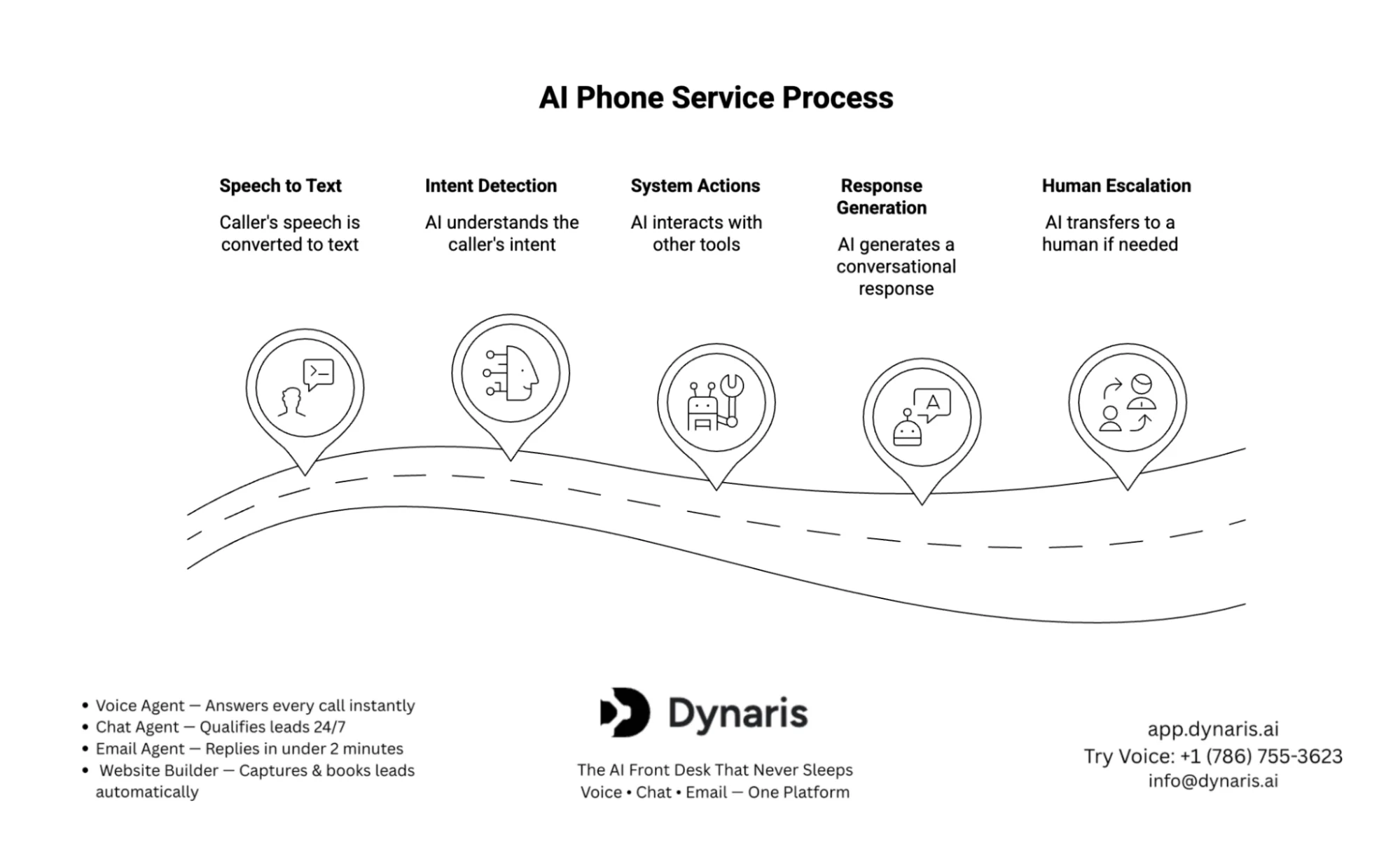
Understanding how an AI phone answering service works helps businesses evaluate whether the technology fits their customer communication workflow. Modern AI answering services rely on several layers of artificial intelligence, including speech recognition, natural language processing, and automated workflow integration.
Speech Recognition Converts Voice Into Text
When a caller contacts a business, the AI call answering service first converts the spoken voice into text using speech-to-text technology.
This step allows the system to understand the caller's request in real time. Modern speech recognition engines are highly accurate and can recognize different accents, languages, and speaking speeds.
Natural Language Processing Interprets Intent
After converting speech into text, the system uses Natural Language Processing (NLP) to determine what the caller wants.
Instead of detecting keywords only, NLP analyzes: sentence structure, intent, context, and tone.
For example, if a customer says: “I want to book an appointment tomorrow morning.”
The AI business phone answering service identifies that the caller wants to schedule an appointment and triggers the appropriate workflow.
AI Connects With Business Systems
Once the request is understood, the AI phone answering service interacts with connected systems such as:
- CRM platforms (Salesforce, HubSpot)
- Booking software (Calendly, Google Calendar)
- Customer databases
- Ticketing systems
This allows the AI to perform actions such as:
- Booking appointments
- Sending confirmations
- Retrieving customer information
- Routing calls to the correct department
Automated Responses and Conversation
The system then generates a response using conversational AI. Instead of robotic scripts, modern AI answering services create natural responses that sound conversational and human-like.
For example, the AI might respond:
“I can help you schedule that appointment. What time works best for you tomorrow?”
Escalation to Humans When Necessary
Even the best AI phone answering service knows when to escalate a call.
If the system detects:
- Frustration
- Complex questions
- Emergency situations
The call is transferred to a human agent.
This hybrid approach allows businesses to automate routine inquiries while maintaining high-quality customer support.
5. AI vs Human vs Virtual Receptionists: The Real Cost Comparison
One of the biggest drivers behind AI phone answering service adoption is cost efficiency.
Below is a realistic comparison of the three common options.
| Reception Type | Average Cost | Scalability | Availability |
|---|---|---|---|
| Human Receptionist | $35,000–$75,000/year | 1 call at a time | Business hours |
| Virtual Receptionist (Live) | $500–$4,000/month | Limited by agents | Extended hours |
| AI Phone Answering Service | $25–$300/month | 500+ simultaneous calls | 24/7 |
Why AI Scales Better
Human receptionists can handle only one call at a time, which creates queues during busy hours.
In contrast, an AI answering service can process hundreds of calls simultaneously with no wait time.
Research on AI-driven customer service systems shows automation can:
- Reduce response times by 75–85%
- Increase first-contact resolution by 20–25%
- Reduce cost per interaction by 45–50%
The Hybrid Model: Best of Both Worlds
In practice, the most successful companies do not replace humans completely.
Instead they use a hybrid system:
- AI handles 80–90% of routine calls
- Humans handle complex or emotional situations
This allows businesses to scale customer support without increasing payroll.
6. Core Features That Separate Smart AI From Robotic Systems
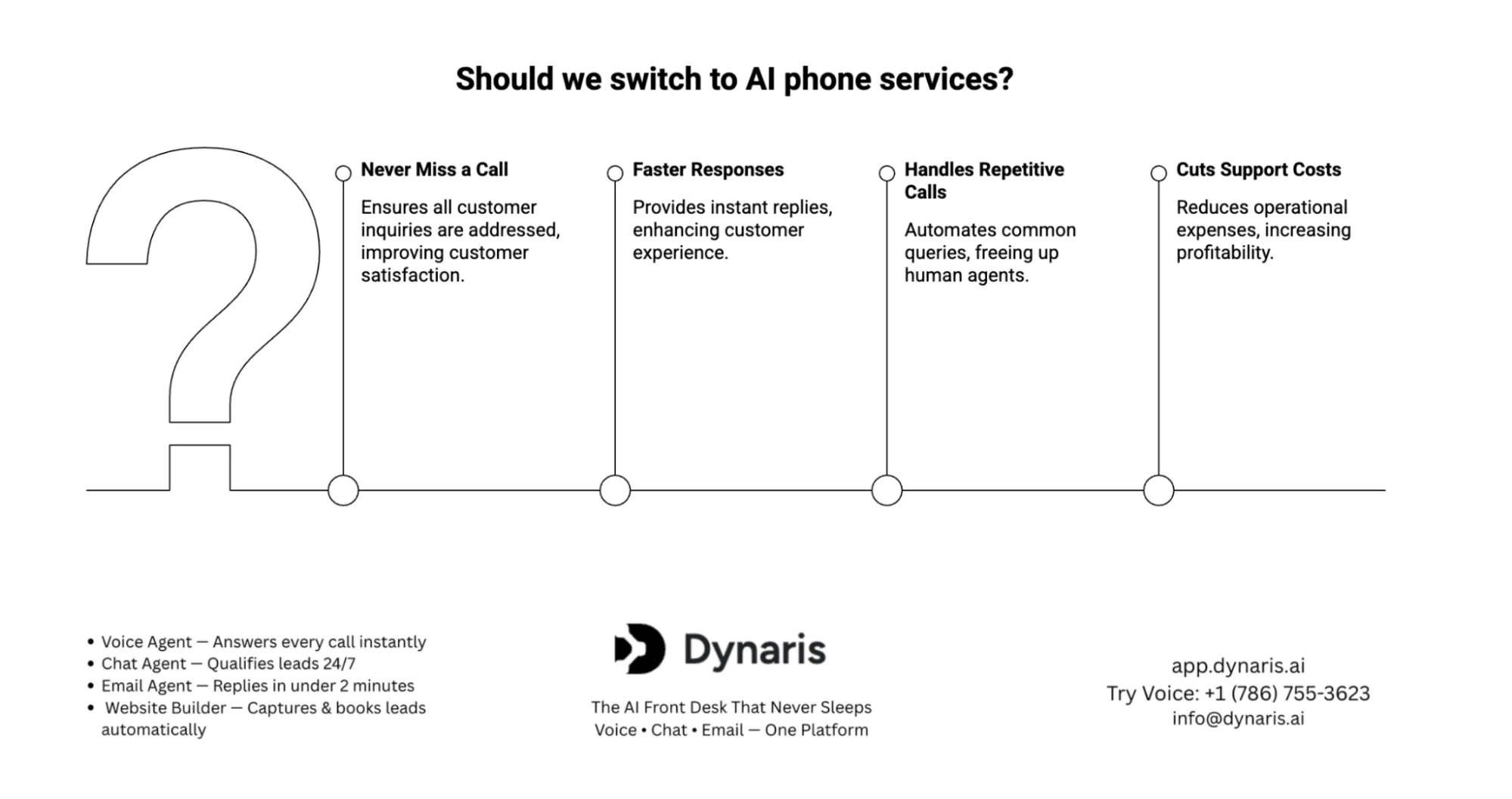
Not all AI answering tools are the same. The best AI phone answering services rely on several advanced technologies.
Natural Language Processing (NLP)
NLP enables AI to understand conversational speech rather than fixed commands.
Instead of saying:
“Press 2 for appointment scheduling.”
Customers can simply say:
“I want to book a service appointment tomorrow.”
The AI interprets the request and executes the task automatically.
Deep Integrations With Business Software
Leading AI business phone answering services integrate with common tools, including:
- Salesforce
- HubSpot
- Google Calendar
- Calendly
- ServiceTitan
- Jobber
These integrations allow AI to book appointments, update customer records, and send confirmations in real time.
Ultra-Low Latency Responses
One of the biggest complaints about older automated systems was slow responses.
Modern AI voice platforms operate with sub-800 millisecond latency, creating conversations that feel much closer to human interactions.
Multilingual Language Detection
Some advanced AI phone answering services automatically detect a caller's language and switch responses instantly.
For example:
- English → Spanish
- English → French
This feature is especially valuable for businesses operating in multilingual markets like the US or UK.
Emotional Escalation Detection
Modern systems analyze voice signals and keywords to detect:
- Frustration
- Urgency
- Emergency requests
If detected, the system can immediately transfer the caller to a human agent.
7. Industry Use Cases for AI Phone Answering Services
Different industries benefit from AI answering services in different ways.
AI Phone Answering Service for HVAC and Plumbing
Home service businesses often receive urgent calls outside business hours.
An AI phone answering service for HVAC or plumbers can:
- Capture emergency leads at night
- Schedule service calls
- Route high-priority jobs to technicians
This prevents lost revenue from missed calls.
AI Phone Answering Service for Restaurants
Restaurants deal with constant phone inquiries:
- Reservations
- Menu questions
- Delivery orders
AI systems integrated with POS platforms can automatically manage reservations and answer common questions.
AI Phone Answering Service for Medical Practices
Healthcare providers benefit from AI by automating:
- Appointment scheduling
- Patient intake
- Reminders
Research highlights that virtual assistants improve service scalability while reducing administrative workload.
AI Phone Answering Service for Real Estate
Real estate agents frequently receive repetitive inquiries about property listings.
AI systems can:
- Answer property questions
- Qualify potential buyers
- Book viewings
This filters out unqualified leads before agents invest time.
8. Business Benefits of AI Phone Answering Services
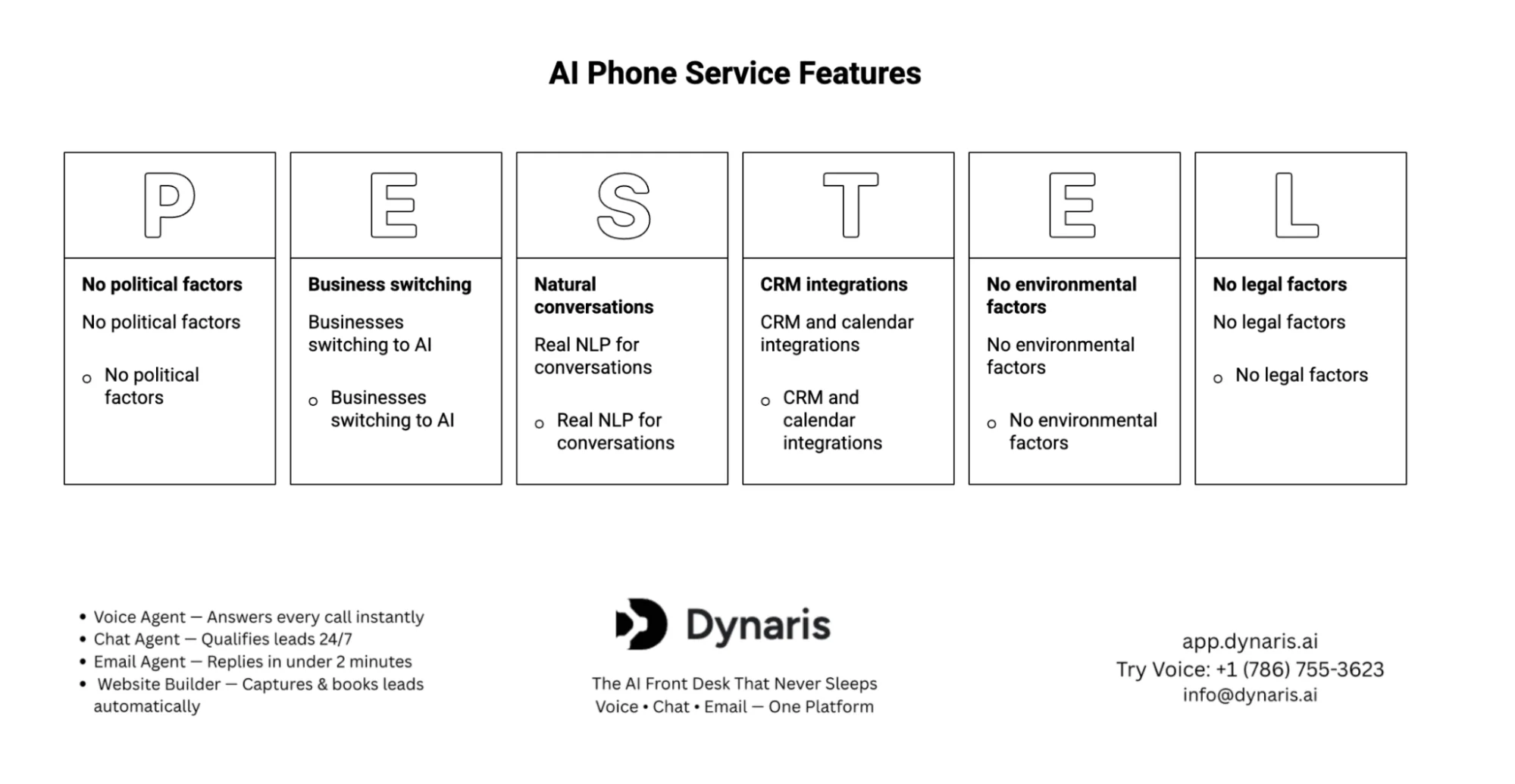
Companies adopting AI call answering services see several measurable advantages.
Capturing More Leads
AI ensures every call is answered, even during nights and weekends.
Research shows AI systems can handle 60–80% of repetitive customer interactions, allowing businesses to scale support efficiently.
Reduced Operating Costs
Compared with traditional receptionists, AI systems dramatically reduce labor costs.
Many businesses replace large call centers with smaller teams supported by automation.
Faster Customer Support
Customers receive immediate answers instead of waiting on hold.
Studies confirm conversational AI significantly reduces response times while improving resolution rates.
Scalable Customer Communication
AI-based systems enable companies to manage thousands of interactions simultaneously without hiring additional staff.
Research in digital customer service confirms AI-powered systems improve operational efficiency while maintaining service quality.
9. AI Phone Answering Service Cost and Pricing
One of the most common questions businesses ask is:
How much does an AI phone answering service cost?
Pricing typically depends on features and call volume.
| Plan Type | Typical Price |
|---|---|
| Basic AI answering service | $25–$50/month |
| Standard AI phone answering service | $50–$150/month |
| Enterprise AI answering service | $150–$300/month |
Some providers also offer AI phone answering service free trials so businesses can test the system before committing.
Factors That Affect Pricing
Several factors influence pricing:
- Call volume
- Integrations
- Multilingual support
- Custom training
- CRM integrations
Businesses should compare providers carefully to find the best AI answering service for their needs.
10. The Reality Check: Lessons From Real Users
While AI answering systems are powerful, they are not perfect.
Feedback from discussion platforms like Reddit and Quora highlights some common concerns.
The “Uncanny Valley” Problem
Some callers dislike AI systems that try to pretend they are human.
Transparency often works better.
Businesses should clearly state that callers are speaking with an automated assistant.
Handling Unpredictable Conversations
AI performs best with structured requests.
However, unusual or complex situations may still require human support.
Hidden Costs
Some providers charge additional fees for:
- Per-minute usage
- Integrations
- Advanced analytics
Before choosing a service, businesses should review pricing tiers carefully.
11. Best AI Phone Answering Services in 2026
Several providers currently lead the AI answering service market.
Dynaris.ai
Best overall AI phone answering service with advanced conversational capabilities.
Smith.ai
Hybrid model combining AI and human receptionists.
Synthflow and Retell AI
Popular among developers building custom voice automation systems.
Anyreach.ai
Strong multilingual support and extremely low latency responses.
Upfirst
Budget-friendly entry point for small businesses.
Choosing the best AI phone answering service for small business depends on factors such as integrations, price, and call volume.
For a direct comparison list, read this full best AI answering services guide.
12. How to Implement an AI Phone Answering Service
Businesses adopting AI answering services should follow a structured process.
Step 1: Audit Missed Calls
Start by calculating how many calls your business misses each month.
Multiply this by the average value of a lead to estimate potential lost revenue.
Step 2: Map Call Flows
Define how the AI should handle common situations:
- Appointment booking
- Service inquiries
- Pricing questions
- Emergency requests
Step 3: Train the Knowledge Base
Upload key information such as:
- Website content
- Service details
- FAQs
- Pricing structures
This allows the AI to answer questions accurately.
Step 4: Stress Test the System
Before going live, simulate real-world calls.
Test scenarios like:
- Urgent service requests
- Complex customer questions
- Appointment rescheduling
This ensures the system performs reliably.
13. Conclusion: AI Phone Answering Is Becoming a Competitive Necessity
Customer expectations have changed dramatically.
People expect businesses to answer calls instantly, regardless of the time of day.
An AI phone answering service allows companies to provide 24/7 availability, capture more leads, and reduce operational costs.
With conversational AI adoption growing rapidly across industries, businesses that still rely on voicemail risk losing customers to competitors who respond faster.
In 2026, AI answering technology is no longer just a convenience—it is becoming an essential part of modern customer communication infrastructure.
If your business still relies on voicemail, every missed call could be a lost customer.
If you found this guide helpful, you may also want to read our articles on AI phone answering services and automated answering services for small businesses. You can also learn how missed call text back apply these concepts in practice.
For related reading, see our best AI answering services article.
Next step: scope a custom build with Dynaris
Dynaris is a boutique custom software and intelligent automation studio. We design and build production voice agents, workflow automation, CRM integrations, and revenue operations systems — scoped as fixed-price engagements, not off-the-shelf SaaS subscriptions.
Typical v1 builds start at $25,000. We begin with a preliminary conversation to confirm fit, then a paid Discovery Sprint before any fixed-price build milestones.
Book a preliminary conversation — we map your voice and answering workflow, manual labor cost, and whether a Discovery Sprint is the right next step. See our process and engagement pricing for ranges.