

Quick Summary
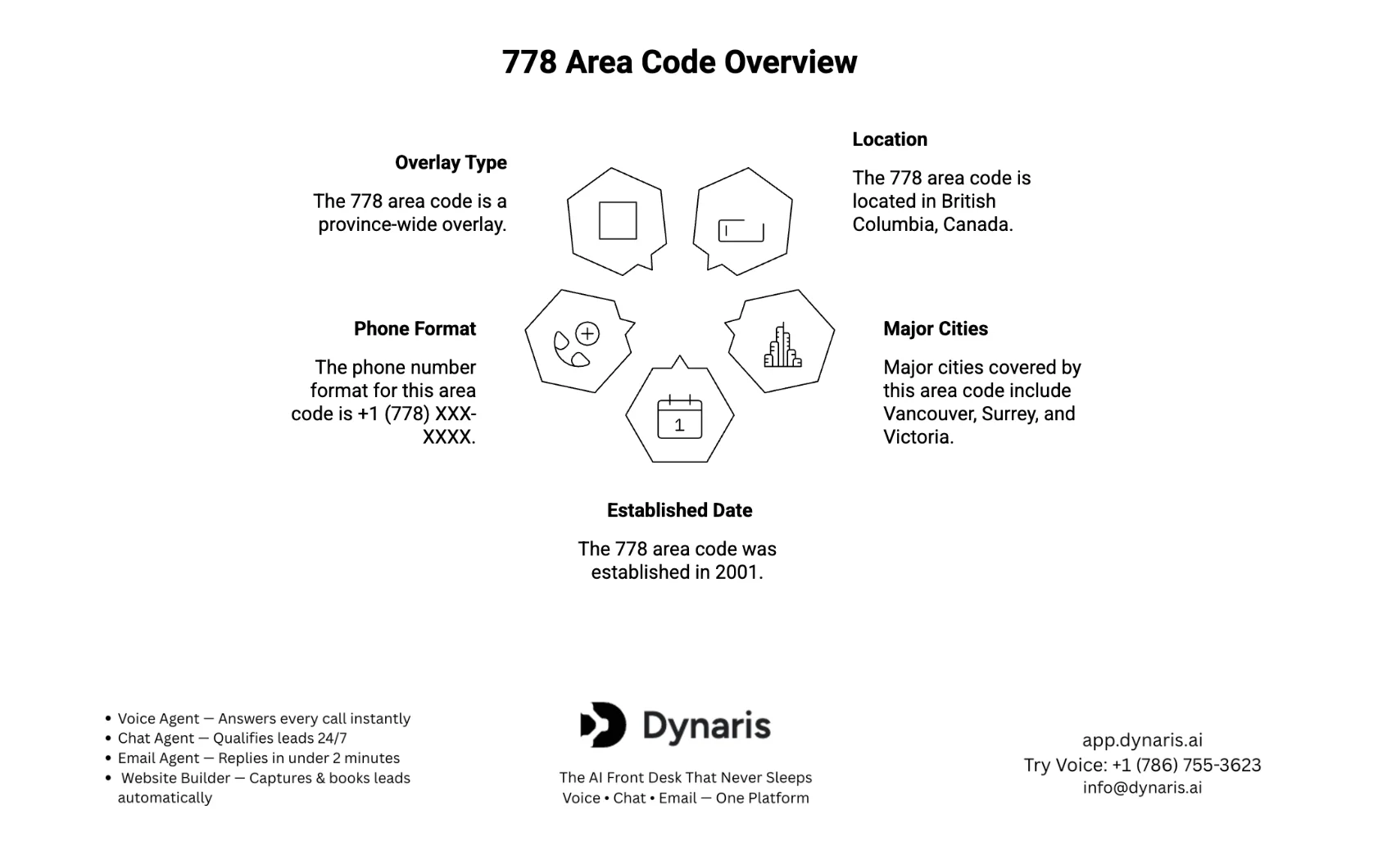
- The 778 area code serves all of British Columbia as a province-wide overlay, meaning it covers major cities like Vancouver, Surrey, Victoria, and hundreds of smaller communities without being tied to a single region
- Introduced in 2001 to handle rising demand, 778 expanded from mobile-only use to a standard area code used for both landlines and business numbers across the province
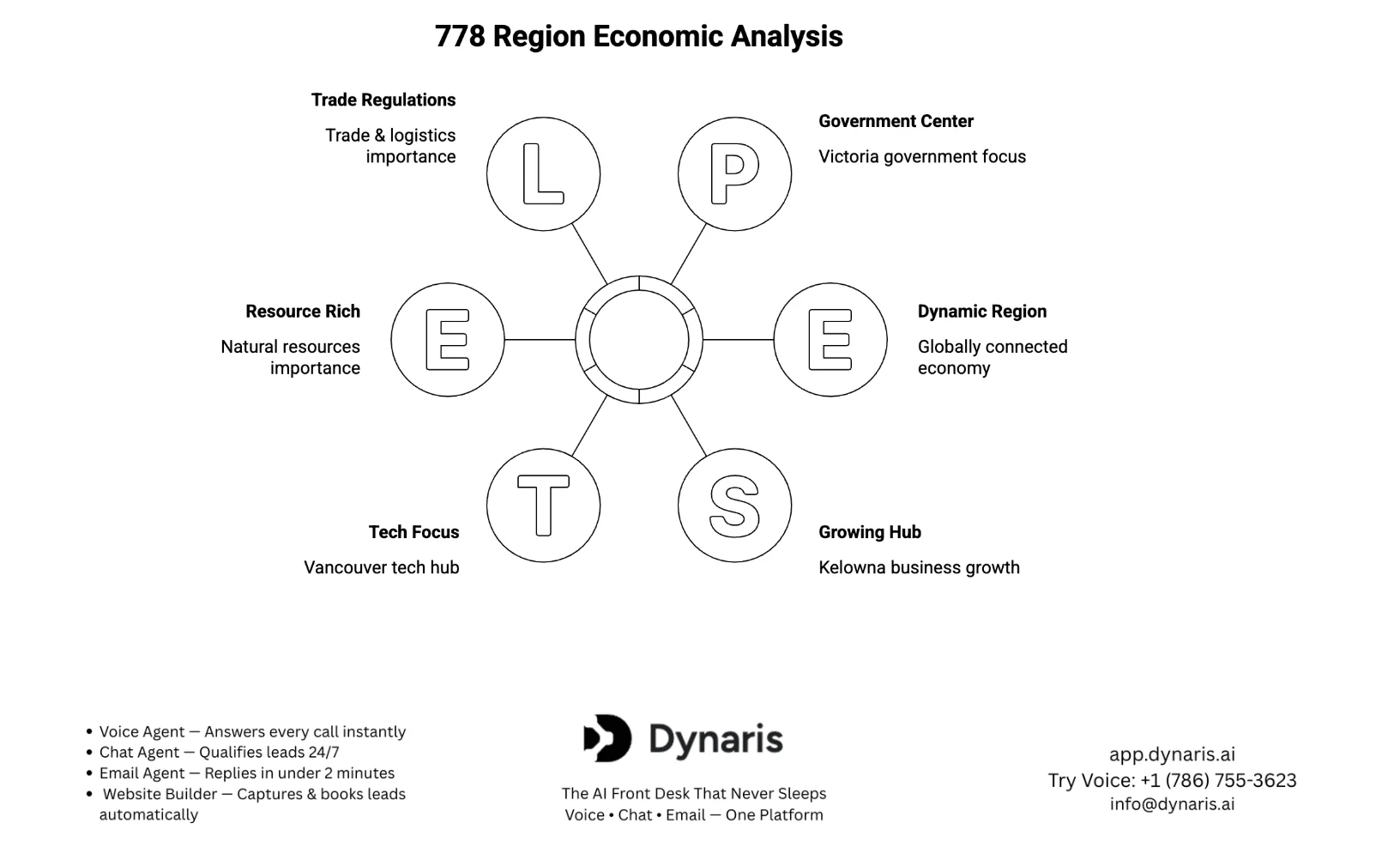
- It operates in the Pacific Time Zone (PT), following PST (UTC -8) in winter and PDT (UTC -7) during daylight saving time, aligning with cities like Vancouver, Seattle, and Los Angeles
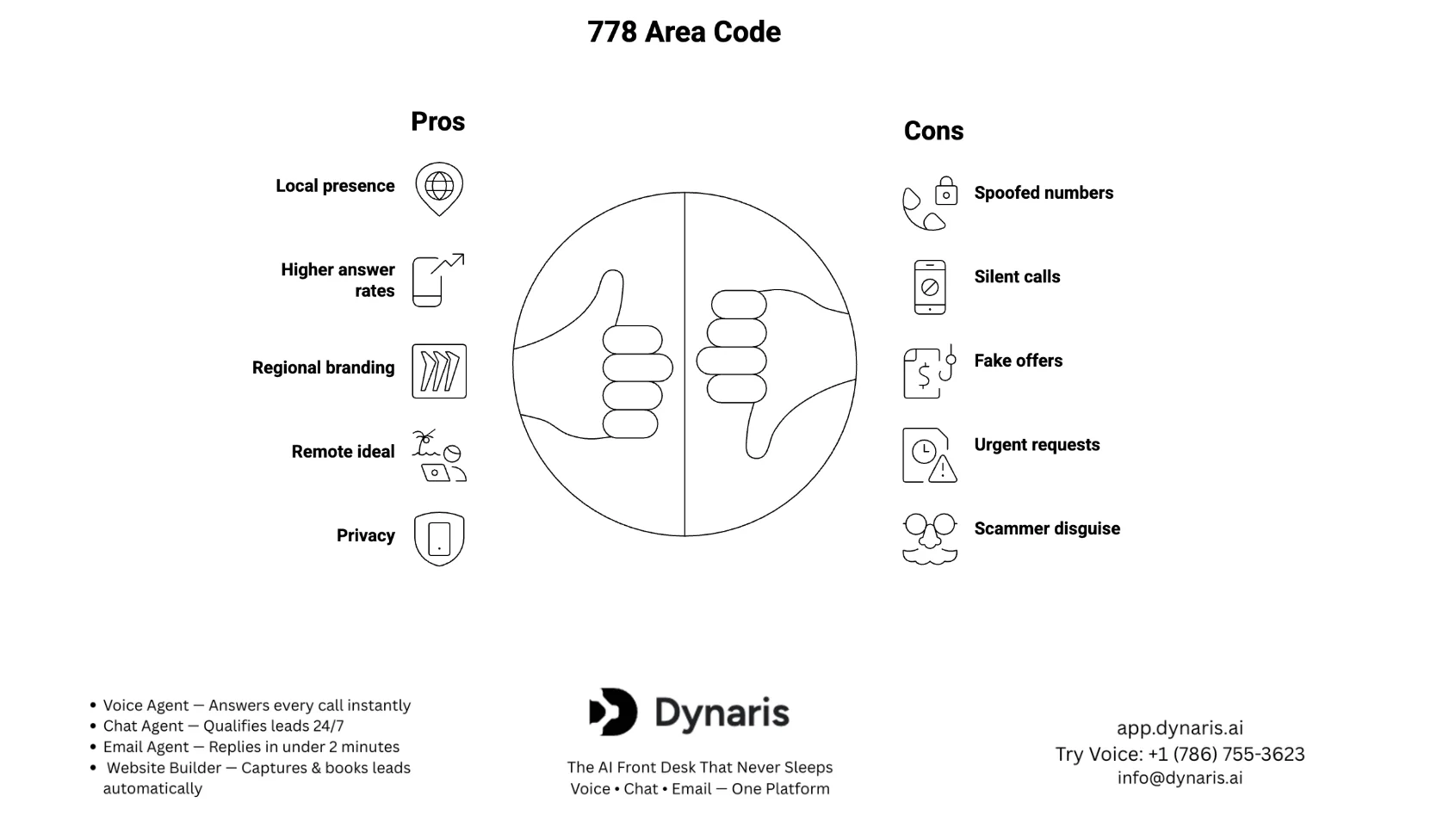
- Businesses prefer 778 numbers because they build local trust, improve answer rates, and support remote operations, making them ideal for startups, agencies, and service providers targeting BC customers
- While most 778 calls are legitimate, some may be spam or scam attempts, so users should verify unknown callers, avoid sharing personal information, and use spam filters when needed
Vancouver, BC, Canada (778 Area Code)
Interactive map preview (OpenStreetMap). Add NEXT_PUBLIC_MAPS_API_KEY to .env.local for the highlighted area-code boundary on Google Maps.
Open this region in Google MapsLocation, Time Zone & Coverage of the 778 Area Code
| Category | Details |
|---|---|
| Location | The 778 area code is located in British Columbia and serves the entire province as an overlay for 604, 250, 236, 672, and 257 |
| Coverage Type | Province-wide overlay (not limited to a single city or region) |
| Areas Covered (All Regions & Cities) | Metro Vancouver: Vancouver, Surrey, Burnaby, Richmond, Coquitlam, Delta, New Westminster, North Vancouver, West Vancouver, Port Coquitlam, Port Moody, Maple Ridge, Langley, White Rock; Fraser Valley: Abbotsford, Chilliwack, Mission; Vancouver Island & Coastal: Victoria, Nanaimo, Duncan, Courtenay, Campbell River, Port Alberni, Parksville; Interior BC: Kamloops, Kelowna, Vernon, Penticton, Salmon Arm, Merritt, Revelstoke; Northern BC: Prince George, Quesnel, Williams Lake, Dawson Creek, Fort St. John, Terrace, Smithers, Prince Rupert; Other Cities & Towns: Cranbrook, Castlegar, Nelson, Fernie, Trail, Kimberley, Kitimat, Squamish, Whistler, Sechelt, Sooke, Summerland, North Saanich, Ladysmith; Unique Case: Hyder, Alaska (telecom-linked due to proximity to Stewart, BC) |
| Time Zone | Pacific Time (PT) |
| Standard Time | Pacific Standard Time (PST) – UTC/GMT -8 hours |
| Daylight Time | Pacific Daylight Time (PDT) – UTC/GMT -7 hours |
| Current Time Offset | UTC/GMT -7 hours (during daylight saving) |
| Time Zone Abbreviation | PST (winter), PDT (summer) |
| Daylight Saving Time (2026) | Starts: March 8, 2026 at 2:00 AM • Ends: November 1, 2026 at 2:00 AM |
| DST Behavior | Clocks move forward in March and back in November (observed across most of British Columbia) |
| Time Zone Notes | Most of the province follows Pacific Time, though a few far eastern areas may observe Mountain Time |
| Map Coverage | The 778 area code covers the entire province of British Columbia due to its overlay structure |
Introduction to 778 Area Code: The British Columbia Number Boom
The 778 area code is one of the most widely used telephone area codes in British Columbia, covering both major cities and remote regions across the province.
Originally introduced in 2001, 778 started as a supplementary code but has now become a standard, province-wide overlay, used alongside other well-known codes like 604 and 250.
Many people still search for answers like:
- Is 778 a local number or long distance?
- Why am I getting calls from 778?
- Is 778 a mobile-only area code?
These questions exist because the telecom system in British Columbia evolved rapidly, and public perception hasn't fully caught up.
From a business perspective, 778 has become especially valuable. It allows companies to establish a local presence in British Columbia without needing a physical office, making it a powerful tool for modern remote businesses.
Where Is the 778 Area Code Located?
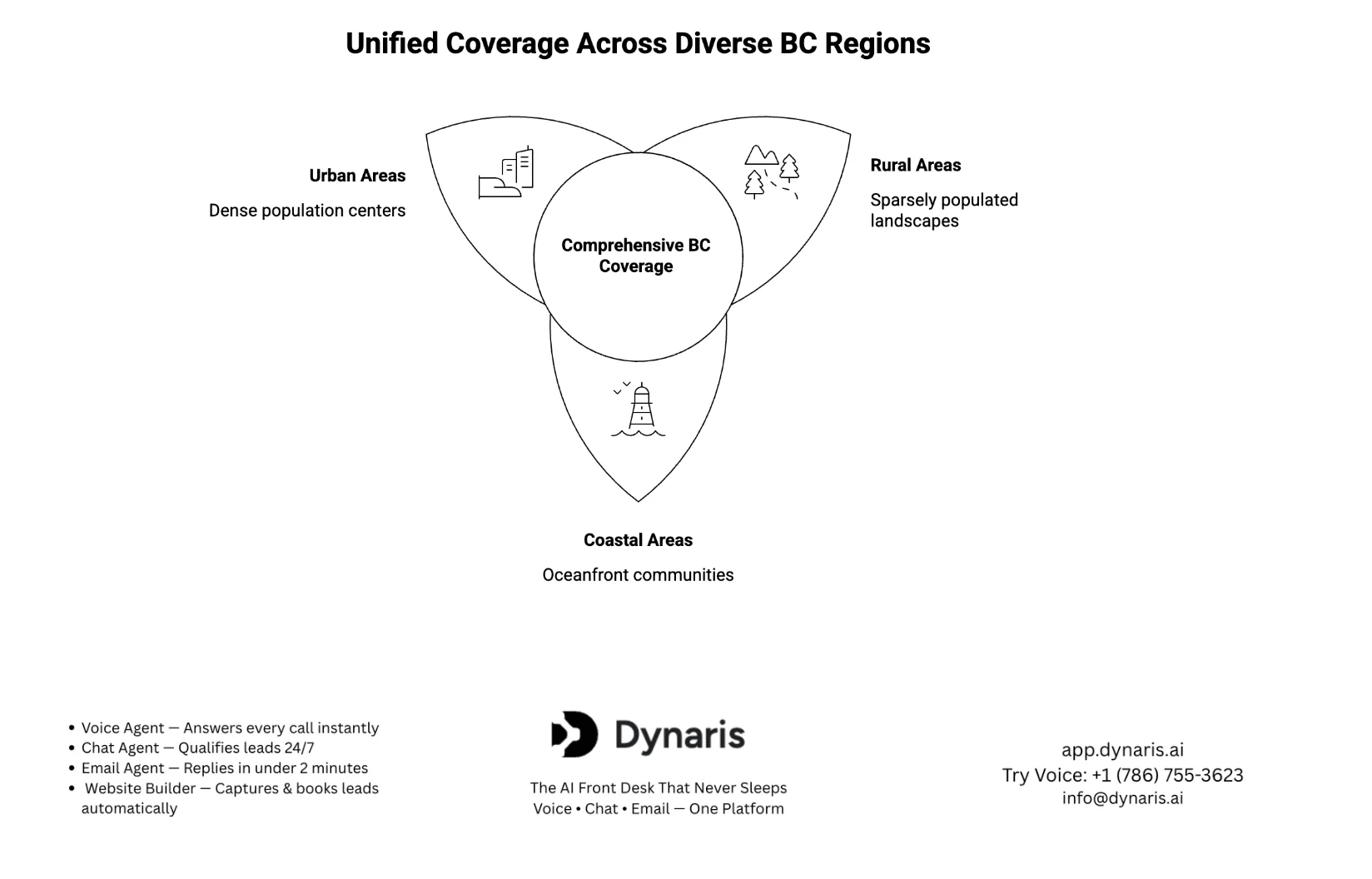
The 778 area code is located in British Columbia, Canada, and serves the entire province as an overlay code.
Unlike traditional area codes tied to a specific region, 778 operates across the same geographic footprint as:
- 604 (Metro Vancouver)
- 250 (Interior and northern regions)
- 236, 672, and 257 (newer overlays)
Major Cities Covered by 778
The 778 area code is used across both dense urban centers and smaller communities, including:
Metro Vancouver and surrounding areas:
- Vancouver
- Surrey
- Burnaby
- Richmond
- Coquitlam
- Delta
- New Westminster
- North Vancouver
- West Vancouver
- Langley
- Maple Ridge
- White Rock
Fraser Valley and nearby regions:
- Abbotsford
- Chilliwack
- Mission
Interior and coastal cities:
- Kamloops
- Nanaimo
- Prince George
- Kelowna
- Vernon
- Whistler
Unique Geographic Insight
A lesser-known telecom anomaly is Hyder, Alaska, a small U.S. town that relies on British Columbia's telecom infrastructure. This highlights how telecom boundaries don't always align with political borders.
British Columbia also borders Washington State to the south. 509 area code serves eastern Washington — covering Spokane, Yakima, and the Tri-Cities region. Businesses operating cross-border between BC and eastern Washington frequently interact with both 778 and 509 numbers.
Key takeaway:
The 778 area code is not tied to one city. It represents a province-wide network used across urban, suburban, and rural British Columbia.
Economic and Business Importance of the 778 Region
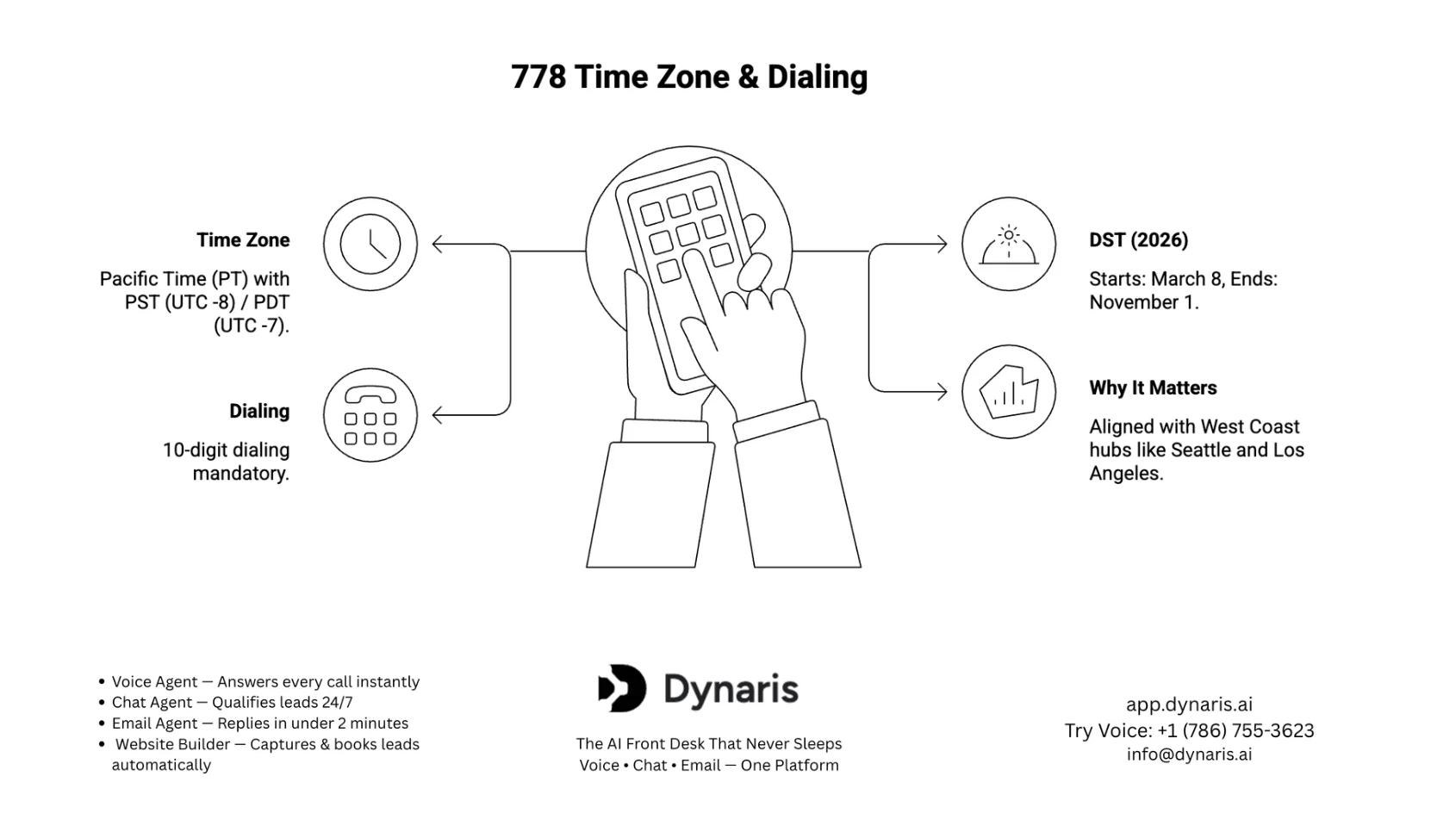
The region served by the 778 area code is one of Canada's most economically active areas.
Key Industries Driving Growth
- Technology and startups (especially in Vancouver)
- Film and television production (“Hollywood North”)
- Tourism and hospitality
- International trade via ports
- Natural resources and energy
This economic diversity makes the region attractive for:
- Entrepreneurs
- Remote service providers
- Agencies and consultants
Population and Demographics
- Approximately 2.6 million people in the Metro Vancouver region
- Highly diverse population with strong global connections
- Continuous population growth due to immigration and economic opportunities
Infrastructure Advantage
- Major international airports
- One of North America's busiest ports
- Advanced digital and telecom infrastructure
From a business standpoint, a 778 number connects you to a high-income, digitally active, and globally connected audience.
History of the 778 Area Code
The 778 area code was introduced as part of a major shift in how telephone numbering was managed in British Columbia. Its history reflects the rapid growth of population, technology, and communication needs across the province.
Early Background: Pressure on Existing Area Codes
Before 778 was introduced, British Columbia primarily relied on two main area codes:
- 604 → serving Metro Vancouver and surrounding regions
- 250 → covering the rest of the province, including interior and northern areas
As demand for phone numbers increased, these area codes began running out of available number combinations. This shortage was driven by several factors:
- Rapid population growth, especially in Vancouver and nearby cities
- Expansion of businesses requiring multiple phone lines
- Widespread adoption of mobile phones
- Increase in internet services, fax lines, and VoIP systems
Unlike earlier decades where one household had a single landline, modern users and businesses required multiple numbers, accelerating exhaustion.
Introduction of 778 in 2001
To solve the growing shortage, the 778 area code was introduced in 2001.
Instead of splitting regions geographically (which would force people to change their numbers), regulators chose an overlay approach:
- 778 was added on top of the existing 604 region
Initially, it was mostly assigned to:
- Mobile phones
- Pagers
- New service lines
At this stage, many people began associating 778 with “cell phone numbers,” which is why that perception still exists today.
Expansion to Province-Wide Overlay
As demand continued to grow, the use of 778 expanded significantly.
- It was gradually extended beyond the Lower Mainland
- Eventually became a province-wide overlay, covering the same areas as:
- 604
- 250
This meant that people in completely different cities could have the same area code, depending on when their number was issued.
Shift to 10-Digit Dialing
One major consequence of introducing overlay codes like 778 was the need for mandatory 10-digit dialing.
Previously:
- Local calls could be made using 7 digits
After overlays:
All calls required:
- Area code + phone number
This change ensured proper routing of calls in regions where multiple area codes existed simultaneously.
Continued Growth and Additional Overlays
Even after 778 was implemented, demand for numbers did not slow down.
As a result, additional overlay codes were introduced in British Columbia, including:
- 236
- 672
- 257
These newer codes now coexist with 778, reflecting the ongoing expansion of telecom needs in the province.
Key Insight
The introduction of 778 marked a turning point in telecom history for British Columbia:
- It shifted the system from geographic identity to scalable numbering
- It allowed continuous growth without disrupting existing users
- It normalized the idea that multiple area codes can exist in the same region
Summary
- Introduced in 2001 as an overlay for 604
- Initially used mainly for mobile and new numbers
- Expanded to cover all of British Columbia
- Led to mandatory 10-digit dialing
- Became part of a multi-overlay system including 236, 672, and 257
604 vs 778: Prestige, Identity, and Reality
One of the most discussed topics online—especially on Reddit and Quora—is the perceived difference between 604 and 778.
The Perception
- 604 is seen as the “original” Vancouver area code
- 778 is viewed as newer and historically associated with mobile numbers
Social Media Insight
Users frequently mention:
- Businesses preferring 604 for “authenticity”
- Individuals feeling 604 carries more prestige
Reality in 2026
- There is no functional difference between 604 and 778
- Call quality, cost, and usage are identical
- The difference is mostly psychological and branding-related
Insight:
For modern users and businesses, trust is built through communication quality—not the area code.
Is a 778 Number Local or Long Distance?
A 778 number is not automatically local or long distance. It depends on:
- The caller's location
- The recipient's location
- The phone plan
Why Confusion Happens
- The overlay system means the same code exists across large regions
- Users assume same province = local call
Real-World Issue
Some users report:
- Condo intercom systems rejecting 778 numbers
- Older telecom systems misclassifying them
Practical Advice:
- Always check your carrier's calling zones
- Don't rely solely on area code to determine call cost
Time Zone of the 778 Area Code
The 778 area code follows the Pacific Time Zone.
Details
- Standard time: UTC -8
- Daylight saving time: UTC -7
Shared With
- Vancouver
- Seattle
- Los Angeles
Business Insight:
This is important for scheduling calls, especially for companies working across Canada and the U.S.
Is 778 a Toll-Free Number?
No, the 778 area code is not toll-free.
Key Differences
- 778 = geographic area code
- Toll-free numbers include:
- 800, 888, 877, 866, 855, 844
Charges for calling 778 numbers depend on your provider and plan.
Why Is a 778 Number Calling Me?
Common Legitimate Reasons
- A business in British Columbia contacting you
- A service provider or support team
- A customer or client
- A virtual business number
Possible Suspicious Reasons
- Spam or robocalls
- Silent calls
- Scam attempts impersonating telecom companies
Social Insight
Many users report:
- Calls with no voicemail
- Numbers that become unreachable afterward
This behavior is commonly associated with spam systems.
778 Area Code Scams and Safety Tips
Common Warning Signs
- Unknown or unfamiliar numbers
- Urgent requests for personal information
- Offers that seem too good to be true
- Suspicious links or messages
How to Protect Yourself
- Do not answer unknown calls
- Avoid sharing personal information
- Verify through official sources
- Use spam filtering tools
Checklist Approach:
- Recognize the number? If not, proceed with caution
- Is the caller creating urgency? Likely a scam
- Are they asking for sensitive data? Do not respond
Why Businesses Choose a 778 Area Code
Key Benefits
- Strong local presence in British Columbia
- Increased call answer rates
- Improved customer trust
- Better branding for regional marketing
- Privacy separation between personal and business calls
Marketing Advantage
Local numbers perform better in:
- Ads
- Landing pages
- Direct outreach
Insight:
Customers are more likely to engage with a business that appears local.
How to Get a 778 Area Code Number
Personal Use
- Available through telecom providers
Business Use
Additional Options
- Number parking
- Online fax services
- Dedicated business lines
Practical Tip
If 778 numbers are unavailable:
- Refresh inventory
- Check later
- Providers rotate number availability
AI Front Desk and the Future of Business Calling
Modern business communication has evolved beyond basic phone systems.
What AI Phone Systems Can Do
- Answer calls automatically
- Speak naturally like a human
- Schedule appointments
- Handle customer queries
- Operate 24/7
Pricing Insight
Advanced AI systems typically cost under $60/month
Insight:
Businesses are shifting from simple phone lines to intelligent communication systems that generate revenue.
Dynaris: Turning a 778 Number Into a Growth Engine
With platforms like Dynaris, a 778 number becomes much more than just a contact point.
What You Can Do
- Use a local BC number
- Automate call handling
- Integrate messaging channels
- Capture and qualify leads
Business Impact
- Never miss important calls
- Improve response time
- Increase conversions
- Scale customer communication
Strategic Insight:
A 778 number builds local trust, while AI tools turn that trust into measurable business growth.
Why Area Codes Still Matter
Despite digital communication growth, area codes still influence behavior.
Psychological Impact
- Local numbers feel more trustworthy
- People are more likely to answer familiar codes
Business Value
- Reinforces local branding
- Improves customer perception
- Supports regional marketing strategies
Final Thoughts
The 778 area code represents more than just a phone number—it reflects how communication has evolved in a fast-growing, digitally connected region.
Whether you're receiving calls, starting a business, or expanding into British Columbia, understanding how 778 works gives you a clear advantage in both communication and strategy.
Looking to learn more about nearby area codes? Explore our guides on the 403 area code (southern Alberta) and the 509 area code (Eastern Washington). Learn how AI receptionists for small business can help British Columbia businesses respond to every inquiry instantly.